The Ping Pong League Spreadsheet That Actually Works (Free Template)
Every office and club ping pong league starts the same way: someone opens a spreadsheet. That is the right first move. A spreadsheet costs nothing, everyone can open it, and it makes the league feel official on day one. Here is the exact structure that works, and, just as important, the three ways it will eventually break, because they are predictable and you can plan for them.
The three tabs your league spreadsheet needs
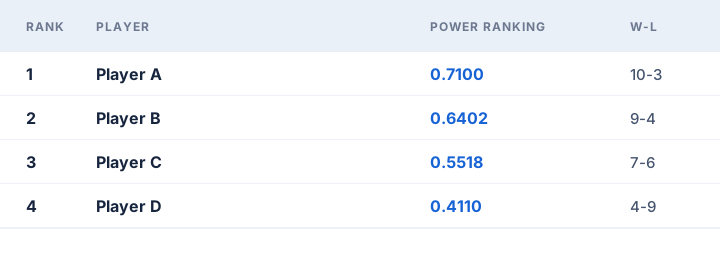
Tab 1: Results. One row per match. This is your source of truth, so never edit it, only add to it.
| Date | Player A | Player B | Winner | Format |
|---|---|---|---|---|
| 2026-07-21 | Priya | Marcus | Priya | Best of 5 |
| 2026-07-21 | Dana | Leo | Leo | Best of 3 |
Tab 2: Standings. Wins, losses, and win percentage per player, computed from the Results tab with COUNTIF formulas. Sort by win percentage, then by wins. Do not hand-type standings, ever. The moment standings are typed by hand, someone forgets, someone disputes, and trust in the board dies.
Tab 3: Players. Names, and if you are at work, teams or departments. This tab powers dropdowns in the Results tab (Data validation, list from a range), which prevents the same player appearing as "Mike", "Michael", and "mike w".
The three ways every league spreadsheet breaks
1. Win percentage lies. The player with an 8-0 record against the two newest hires sits above the player who is 12-5 against your best. Everyone can feel it is wrong, but the spreadsheet cannot. A real ranking has to weigh who you beat, not just how often you won. This is why chess uses a rating, not a win count. Building an opponent-weighted rating in a spreadsheet means implementing a chess-style rating method in formulas, which is a weekend project that breaks the first time someone inserts a row.
2. Nobody confirms results. With one shared sheet, one person types in a win and the other player finds out at lunch. Disputed entries get edited silently. There is no notion of "the loser has not agreed to this yet", so the sheet slowly fills with results only one side remembers.
3. It goes stale the week the owner gets busy. A league spreadsheet has exactly one admin: whoever made it. When they are out for a week, results pile up on sticky notes, standings freeze, and the league quietly dies. Ask us how we know.
When to retire the spreadsheet
A sheet is perfect for a month-long ladder with eight people. When any of these become true, it is time for a real system:
- You have more than ten regular players or more than one location.
- People argue about the fairness of the standings.
- You want history to survive longer than one season, or one job change.
- You are re-entering results from texts, DMs, and memory.
Skip the formulas. Keep the league.
Breakroom Battles is the league spreadsheet, grown up: record a match from your phone in seconds, your opponent confirms it, and everyone gets a Power Ranking that weighs who you actually beat. Circles keep your office or club board private, and it is free for players.
Start your league freeHowever you run it, on a sheet or on Breakroom Battles, the advice at the core is the same: record every match, never hand-edit standings, and make the loser confirm the score. Everything else is decoration.