How to Run an Office Ping Pong Tournament: Bracket, Round Robin, or Ladder
An office ping pong tournament is the easiest morale win in the building: one table, one afternoon, and the whole floor finds out the quiet analyst has a forehand from another dimension. The difference between a tournament people talk about for months and one that fizzles by round two comes down to picking the right format for your headcount and your timeline.
Pick your format in ten seconds
| Situation | Format | Why |
|---|---|---|
| 8 to 32 players, one afternoon | Single elimination bracket | Maximum drama, fits in hours |
| Under 10 players, a week or two | Round robin | Everyone plays everyone, fairest result |
| Any size, no end date | Ladder league | Nobody is eliminated, survives busy weeks |
Running a bracket day
- Cap signups at a power of two (8, 16, 32) if you can. If not, give first-round byes to your best players; never make people play an awkward play-in round at 4:55 pm.
- Seed honestly. If you have any match history, use it to keep the two best players on opposite sides of the bracket. If you have nothing, draw names from a mug in public. Never seed secretly; it breeds conspiracy theories faster than any office rumor.
- Keep matches short early, long late. Best of 3 through the quarterfinals, best of 5 from the semis. Games to 11, win by 2. A 16-player bracket fits in roughly three hours on one table.
- Say the rules before the first serve. Two serves each then rotate, let serves replayed, edges count, net posts do not. Thirty seconds of announcements prevents every mid-match debate. Print our one-page rules sheet and tape it to the wall.
- Give the winner something silly and permanent. A tiny trophy that lives on their desk beats a gift card. The trophy is a conversation piece; the conversation is free marketing for the next tournament.
Running a round robin
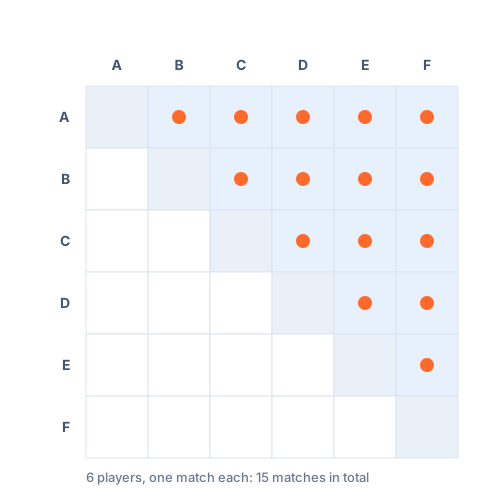
Everyone plays everyone once; most wins takes it, with head-to-head as the tiebreaker. It is the fairest format there is and the reason it only works small: ten players means 45 matches. Post the full match list somewhere public and let people knock games out whenever both are free during the window. Deadlines matter more than scheduling: give the round two weeks, and any unplayed match scores as a draw for neither player.
The morning-after problem
Here is what happens after a great tournament: for three days everyone wants to play, there is no structure to catch that energy, and by the next week the table is quiet again. The bracket crowned a champion and then dissolved. This is the single most common way office ping pong dies, at its own peak.
The fix is to have the league ready before the tournament ends. Announce it at the final: the board stays up permanently, every match now counts toward a Power Ranking, and the tournament champion enters at the top with a target on their back. An always-on ladder catches the post-tournament energy because it is the opposite of a bracket: nobody is ever eliminated, matches happen whenever two people are free, and the board updates for months, not hours. We wrote a full playbook on making a league that lasts.
Have the league ready before the final ends
Breakroom Battles gives your office a permanent board: record matches from a phone in seconds, opponents confirm results, and an improved opponent-weighted Power Ranking keeps the standings honest. Run the tournament for the drama; keep the league for the mornings after.
Set up your board freeRelated: how ping pong rating systems actually work, and the printable office rules sheet.